Journal · Essay · Spring
Love was always the source.
Published
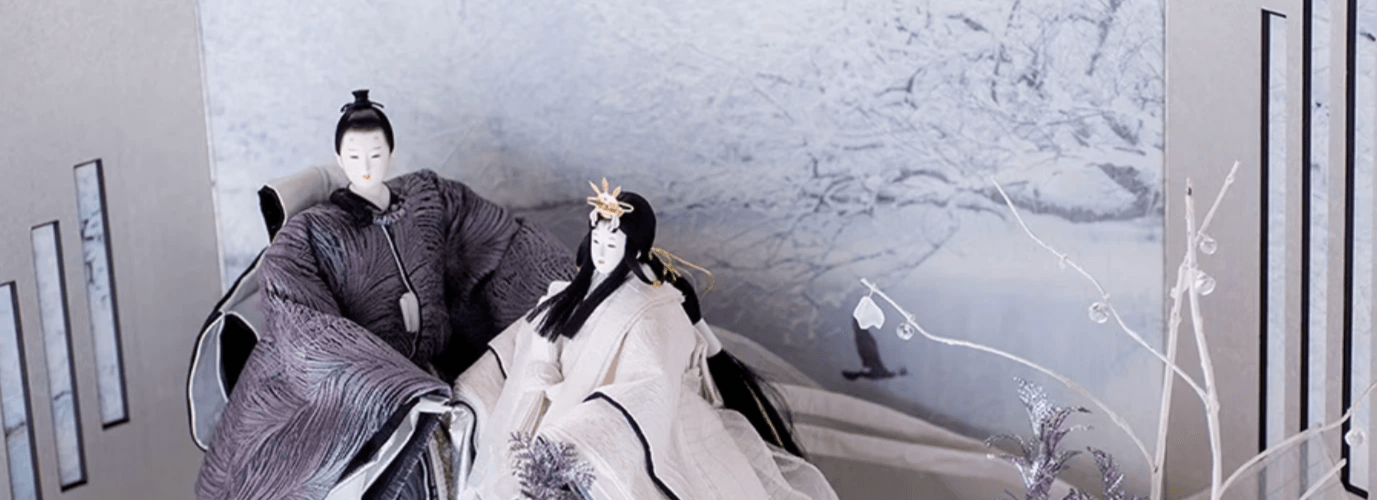
In Japan, there is a festival on March 3 to wish girls good luck.
Dolls are displayed, with a male and a female doll in the center, dressed in the costumes of a prince and princess of the imperial court. It is said that the beautiful, harmonious pair of hina dolls symbolizes a happy marriage for a girl.
People prayed to these dolls, dressed in a style more than 1,000 years old. They prayed that the dolls would protect their children from injury and illness, and that the children would have happy families in the future.
In the past, infant mortality was high, so parents prayed that their daughters would grow up healthy and gentle.
Do you know The Tale of Genji?
Hina dolls wear the same costumes as the people in The Tale of Genji.
Noble women of that time rarely went out, and spent their whole lives indoors. Women were caged birds, after all. Unlike men, they were not free to go out. They were taught to be “feminine” and docile, which was what it took to be a princess.
For these aristocratic women, the real pleasure of life was love.
In the Heian period, people did not live as long as they do today. Women could marry at 13, and men at 15.
The Heian period was also a time of polygamy. Being able to support many wives was a sign of status in society. However, a man could have only one legitimate wife.
To be chosen as the legitimate wife, family background and intelligence mattered more than beauty. For example, women from families close to the emperor, or from families that held high and powerful official positions, were welcomed as legitimate wives and given a certain status.
Other women were known as concubines. A legitimate wife lived in the man’s house, but a concubine did not; the man visited her at her home.
If a man heard that a woman was beautiful, he would send her a letter. Letters were the only way to communicate, so the literature of this period is often of very high quality.
Love has always been the source of everything.